
How Hollywood turns history into myth
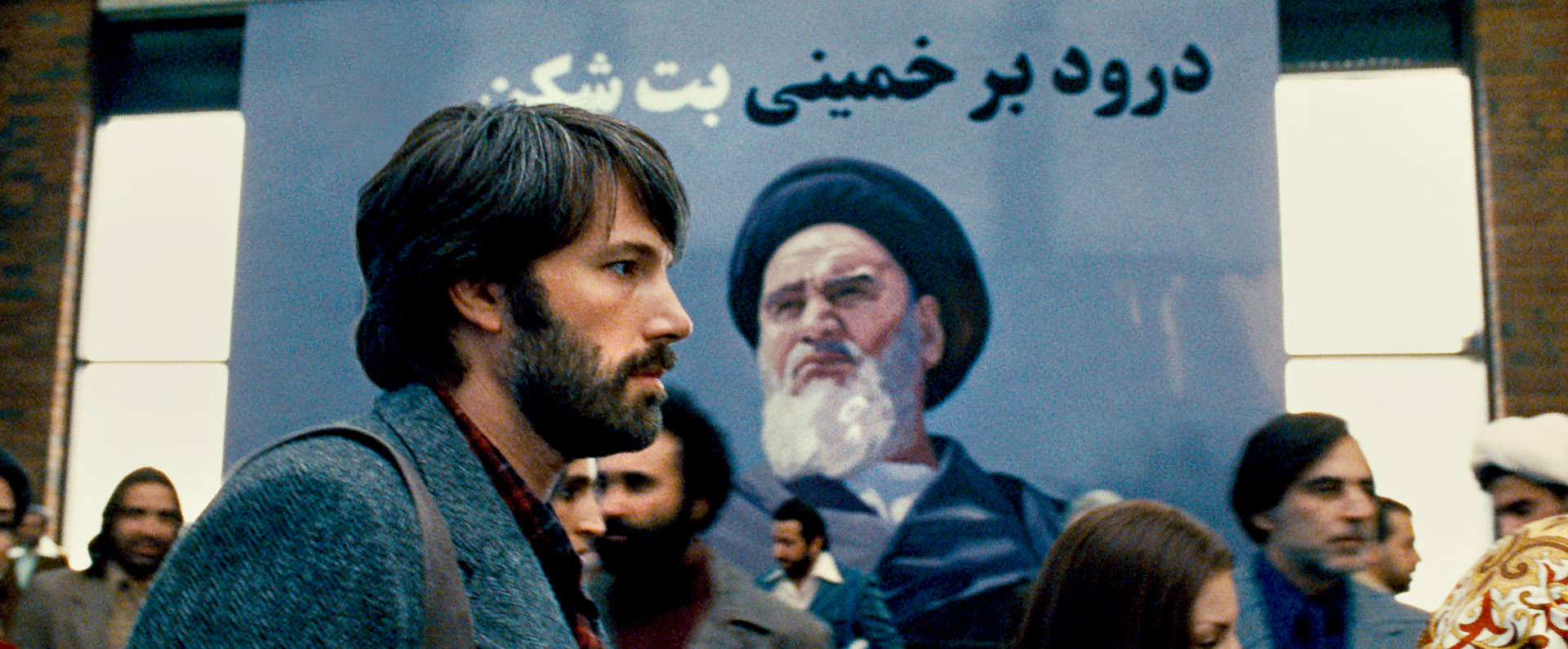
When geopolitical tensions involving Iran resurface in the news cycle, something curious happens in Western popular culture. Older cultural texts suddenly return to relevance. Films, documentaries, and television dramas that appear to explain the country begin circulating again in recommendation algorithms and digital charts. Recently, Ben Affleck’s 2012 political thriller Argo quietly reappeared among the most downloaded titles on Apple’s iTunes movie charts following renewed hostilities involving Iran.
At first glance this may seem trivial, a simple example of audiences revisiting a suspenseful historical drama during a moment of geopolitical anxiety. Yet the phenomenon reveals something more significant about the relationship between cinema and political memory. When audiences search for explanations of current events, they often turn not to historians or diplomats but to films. Cinema becomes a cultural archive through which geopolitical conflict is remembered, interpreted, and emotionally processed.
This raises an uncomfortable question. What happens when the stories that shape our understanding of history are only loosely tethered to historical reality?
Argo, which won the Academy Award for Best Picture in 2013, presents itself as a dramatization of the 1979 Iran hostage crisis and the CIA operation that extracted six American diplomats from Tehran. Like many historical films, it carries the familiar qualifier: “based on a true story.” The phrase is so ubiquitous that audiences rarely pause to consider what it actually means. Yet from a narrative perspective it is almost meaningless. A film may be ten percent true, ninety percent true, or merely inspired by a historical footnote and still legitimately claim the label. Goldilocks could theoretically be “based on a true story.” The phrase provides no measurable threshold of accuracy. What it does provide is something far more powerful: authority.
By invoking historical truth, the film borrows the credibility of history while retaining the freedom of fiction.
Understanding why this matters requires recognising the unique role cinema plays in shaping how nations remember themselves and how they interpret others.
The triangle of narrative power
Historical events rarely reach the public in their raw form. Instead they pass through a sequence of narrative filters. Governments frame events according to strategic interests. News organisations interpret those events through editorial and ideological lenses. Cinema then transforms these interpretations into emotionally compelling stories.
The result is a kind of narrative triangle: the state, the media, and the cinematic imagination.
Of these three, cinema is often the most enduring. Government statements fade and newspaper coverage recedes into archives, but films linger in cultural memory for decades. The images they produce become shorthand for complex historical moments. Many people, for instance, remember the sinking of the Titanic not through historical accounts but through James Cameron’s sweeping romantic epic. Similarly, the Vietnam War, for many Western audiences, exists partly through the visual language of films such as Apocalypse Now and Platoon.
Cinema does not merely illustrate history. It gives history a face, a rhythm, and an emotional logic.
French theorist Roland Barthes described this process as the transformation of history into myth. In his influential collection Mythologies, Barthes argued that cultural narratives gradually naturalise particular interpretations of events until they appear self evident. Myths do not necessarily lie outright. Rather, they simplify, compress, and reframe reality until the story becomes easier to believe than the complicated truth from which it emerged.
Argo operates squarely within this myth making tradition.
Reinventing the hostage crisis
The historical incident behind Argo is known as the “Canadian Caper.” During the Iran hostage crisis, six American diplomats evaded capture after militants stormed the United States embassy in Tehran. They were secretly sheltered by the Canadian ambassador and eventually extracted from Iran with the help of a CIA operative posing as a Hollywood film producer scouting locations for a science fiction movie.
The real story was already unusual enough to sound cinematic. Yet the film reshapes the event in ways that subtly alter the balance of historical credit and narrative focus.
In reality, Canadian diplomats played a central role in sheltering and protecting the Americans. In the film, this contribution is acknowledged but relegated largely to the margins of the narrative. The emotional centre of the story shifts decisively toward the CIA operative Tony Mendez, played by Affleck himself, whose ingenuity and determination drive the plot forward.
The film also amplifies tension through invented or exaggerated sequences. Airport chases, last minute bureaucratic reversals, and hostile confrontations with Iranian authorities heighten suspense but bear little resemblance to the comparatively uneventful departure that occurred in reality.
None of these changes are unusual for a thriller. Dramatic compression is an accepted part of cinematic storytelling. The issue is not simply that the film takes liberties with historical detail. It is that these liberties consistently reinforce a particular national narrative.
The complex multinational diplomacy of the real operation becomes, in cinematic form, a story about American ingenuity saving the day.
Cinema and the imagination of nations
This transformation becomes easier to understand when viewed within a broader cultural pattern. Cinema has long functioned as a tool through which nations imagine themselves.
Political theorist Benedict Anderson famously described nations as “imagined communities.” Members of a nation will never meet most of their fellow citizens, yet they share a sense of collective identity sustained through shared stories, symbols, and cultural rituals. Cinema has become one of the most powerful vehicles through which those shared narratives circulate.
Every national cinema develops recurring myths about its identity.
British films often emphasise stoic resilience in moments of crisis. Christopher Nolan’s Dunkirk transforms a desperate wartime evacuation into a story of collective endurance and quiet heroism. Similarly, The King’s Speech frames a royal speech impediment as a metaphor for national unity during wartime uncertainty.
French cinema frequently returns to the mythology of resistance during the Second World War. Films such as Jean Pierre Melville’s Army of Shadows or Louis Malle’s Au Revoir Les Enfants foreground acts of moral courage during Nazi occupation, allowing the nation to imagine itself primarily as a society of resisters rather than collaborators.
Russian cinema repeatedly revisits the Great Patriotic War, portraying national identity through narratives of sacrifice and survival. Chinese historical epics often emphasise unity, order, and civilisational continuity.
Hollywood participates in the same tradition. The United States often imagines itself on screen through stories of individual ingenuity, technological creativity, and heroic intervention in moments of crisis. Top Gun, American Sniper, and Zero Dark Thirty all operate within variations of this framework.
Argo belongs squarely within that lineage.
The film tells a story that reinforces a familiar American myth: when institutions fail and bureaucracies stall, a resourceful individual emerges to solve the problem.
The politics of representation
Another layer of meaning emerges in the film’s depiction of Iran itself. While the narrative centres on American protagonists, the Iranian setting functions largely as a threatening backdrop. Crowds chant angrily outside embassy gates. Revolutionary guards loom at checkpoints. Streets feel volatile and unpredictable.
This portrayal reflects long standing patterns in Western representations of the Middle East. Cultural critic Edward Said famously described this phenomenon as “Orientalism”: a tradition in which Western media and literature depict Eastern societies as irrational, chaotic, or exotic, thereby reinforcing a sense of Western order and rationality by contrast.
Argo does not necessarily set out to promote such stereotypes deliberately. Yet the film’s narrative structure depends on a clear moral geography. The American characters embody ingenuity and calm professionalism. The Iranian environment becomes a space of danger and unpredictability against which that professionalism appears heroic.
This dynamic makes the story legible to Western audiences but simultaneously simplifies the political and social complexities of Iran itself.
“It’s only entertainment”
At this point, defenders of the film might raise an obvious counterargument. Argo is, after all, a Hollywood thriller. It was never intended to function as a documentary. Audiences understand that dramatic films take liberties with historical detail.
This is true. Yet the cultural power of cinema lies precisely in its ability to make fiction feel emotionally convincing. Entertainment is not separate from meaning making. On the contrary, entertainment often makes narratives more persuasive because it invites viewers to experience events rather than merely read about them.
Media theorist Stuart Hall argued that representation shapes how societies construct meaning. Images, stories, and recurring narrative patterns gradually influence how audiences interpret reality. When historical films present a particular interpretation of events, that interpretation can quietly become the dominant version remembered by the public.
The phrase “based on a true story” amplifies this effect. By invoking historical authenticity, it encourages audiences to accept fictionalised events as plausible reconstructions of reality.
In the case of Argo, the danger is not that the film fabricates history outright. The danger is that it subtly reshapes a collaborative diplomatic success into a narrative of singular national heroism.
The return of cinematic memory
The resurgence of Argo in digital charts during renewed tensions involving Iran demonstrates how these cinematic narratives reenter public consciousness. When geopolitical conflict returns to the headlines, audiences often revisit films that appear to explain the historical roots of the situation.
Cinema thus becomes a kind of cultural memory bank. It stores simplified narratives that can be reactivated whenever contemporary events resemble the historical moments they depict.
The problem, of course, is that these narratives may already be shaped by dramatic embellishment and ideological framing. When audiences rely on films to interpret complex political realities, they risk absorbing the emotional logic of storytelling rather than the messy ambiguities of history.
This does not mean historical films should abandon storytelling altogether. Narrative compression and dramatic invention are unavoidable elements of cinema. What matters is recognising that the stories we consume on screen often tell us as much about the cultural anxieties of the present as they do about the events of the past.
History as believable story
In the end, Argo is an expertly crafted thriller. Its pacing is sharp, its humour self aware, and its depiction of Hollywood absurdity entertaining. As cinema, it works remarkably well.
The deeper question is what happens when a compelling story begins to replace a complicated reality.
The phrase “based on a true story” does not guarantee historical accuracy. It functions as a narrative strategy that invites audiences to trust what they see. Once that trust is established, fictional elements can blend seamlessly with genuine events until the distinction becomes almost invisible.
Cinema does not merely depict history. It determines which versions of history feel believable.
When audiences return to films like Argo during moments of geopolitical uncertainty, they are not simply revisiting an old thriller. They are reentering a cinematic version of history that may shape how the present is interpreted.
That is the quiet power of historical cinema.
And it is precisely why the stories nations tell about themselves on screen deserve to be examined as carefully as the histories they claim to represent.
Leave a Reply