
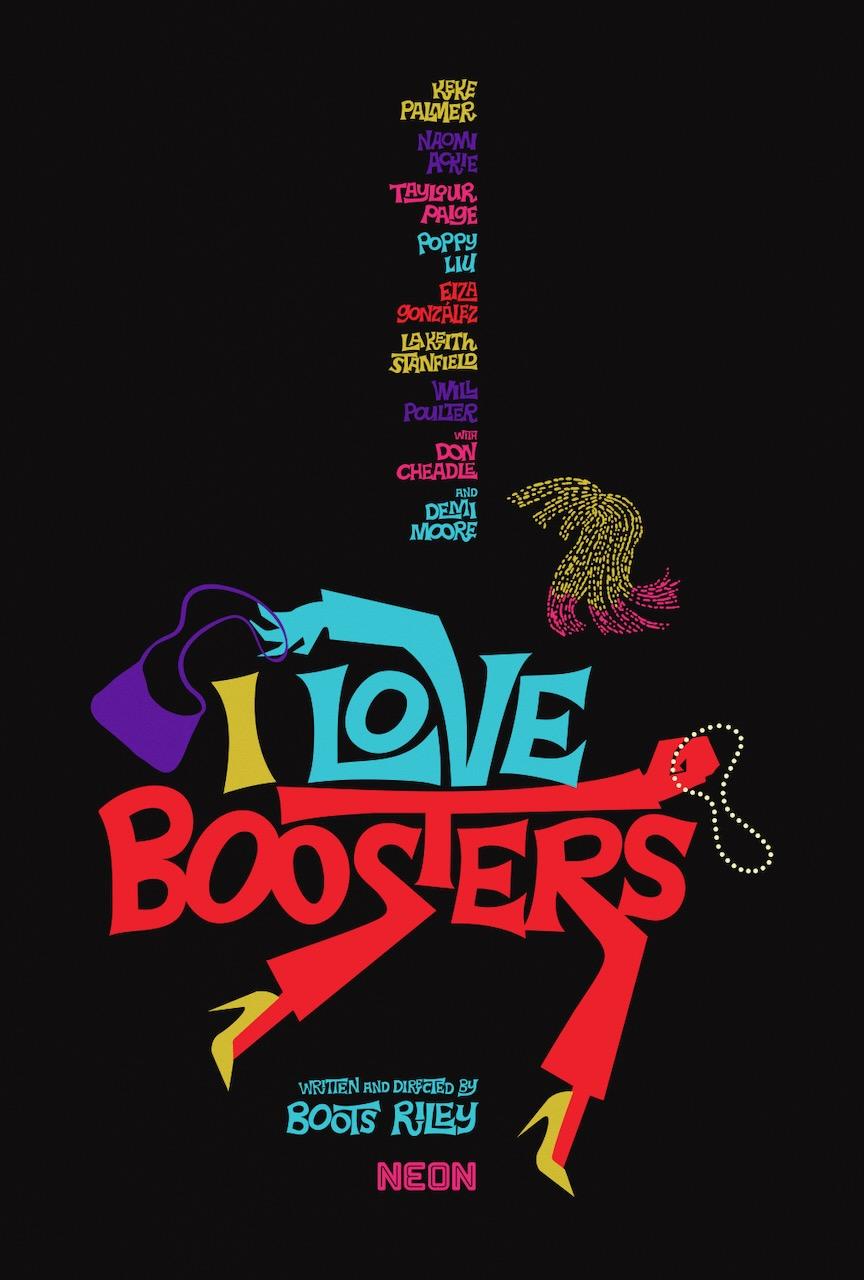
Boots Riley’s satire turns a fashion heist into a provocative experiment about value, prestige, and the fragile mythology of luxury culture.

Premiering at the South by Southwest Film & TV Festival, Boots Riley’s latest film uses the language of the heist comedy to interrogate the strange economics of luxury fashion. Beneath its anarchic humour is a deeper question. How do brands, identity, and belief shape the value we attach to objects?
Luxury fashion may be the only industry in which theft reveals more about value than purchase. A designer handbag priced at several thousand dollars appears to possess obvious worth, yet that worth dissolves the moment the mythology surrounding the brand is removed. Strip away the logo, the aura of exclusivity, the carefully engineered scarcity, and the object returns to its material reality. It is simply leather, stitching, and design.
That strange alchemy sits quietly at the centre of I Love Boosters, the latest film from Boots Riley. The film premiered as the opening night selection at the South by Southwest Film & TV Festival, where early reactions described it as chaotic, playful, and sharply political. For audiences familiar with Riley’s earlier film Sorry to Bother You, the tone will feel immediately recognisable. Once again Riley transforms a familiar setting into a surreal satire of contemporary capitalism.
Fashion as Symbolic Value
On the surface the premise is straightforward. A crew of organised shoplifters led by a character played by Keke Palmer targets high end fashion retailers, moving through immaculate boutiques with calculated confidence. Yet the film quickly makes clear that the heists themselves are only the beginning of the story.
Luxury fashion occupies a peculiar position within consumer culture because its value is only partially material. The craftsmanship of certain garments may indeed be impressive, but the enormous price difference between a designer bag and a high quality non branded equivalent cannot be explained purely by labour or materials. What the consumer purchases is not only the object but the story surrounding it. The brand promises prestige, exclusivity, and belonging. Wearing the item becomes a form of cultural signalling.
This dynamic was described decades ago by the philosopher Jean Baudrillard, who argued that consumer goods increasingly function as signs within a symbolic economy. A luxury item circulates less for its practical use than for its ability to communicate status. The logo becomes a language through which identity is expressed.
Riley’s film appears to dramatise this logic through exaggeration. By targeting the symbolic centre of luxury culture, the shoplifting crew exposes how fragile that symbolic system can be.
Theatre of Theft
Instead of presenting the thefts as tense criminal operations, Riley stages them with an almost playful theatricality. In one sequence the group moves through a pristine boutique with such casual assurance that staff momentarily hesitate, unsure whether they are witnessing a crime or some kind of performance. Display counters become stages and luxury items become props.
The ensemble surrounding Palmer reinforces the film’s satirical perspective. Characters played by Naomi Ackie and LaKeith Stanfield embody different relationships to the luxury system they are exploiting. Some treat the heists as rebellion, others as opportunity, and others as spectacle. Meanwhile a fashion industry figure played by Demi Moore represents the establishment that gives the stolen objects their cultural authority in the first place.
Cinema has explored consumer rebellion before. Fight Club turned corporate destruction into a form of catharsis, while The Bling Ring portrayed celebrity burglary as the pathological endpoint of fame obsessed youth culture. Riley’s approach feels different. His characters are not fascinated by luxury culture in the way Coppola’s protagonists were. Instead they treat the system with open irreverence.
By stealing luxury goods rather than revering them, the characters interrupt the ritual through which those goods acquire symbolic power. Their crimes become a form of theatre that exposes the delicate mythology sustaining the industry.
Luxury in the Age of Social Media
Riley’s satire feels particularly timely because luxury culture has become inseparable from social media. Platforms such as Instagram and TikTok have transformed fashion into a visual currency. A designer item now circulates globally through images long before most people encounter it physically.
Influencers, limited edition releases, and resale platforms have intensified the symbolic value of the brand. A handbag or pair of trainers becomes desirable not only because of its design but because of its visibility within online culture. The photograph of the object often becomes more culturally important than the object itself.
This dynamic reinforces the philosopher Slavoj Žižek’s observation that ideology survives through ritual participation. Consumers may privately recognise that a logo carries little intrinsic meaning, yet they continue to perform the rituals that grant it value. Luxury consumption becomes a public performance of belonging.
Within this environment the act of stealing luxury goods becomes strangely revealing. If a supposedly rare item can be removed from its pedestal with relative ease, the illusion of exclusivity begins to wobble. The mythology surrounding the brand starts to look less like reality and more like collective agreement.
The Fragility of the Brand
Defenders of luxury fashion often argue that the industry represents genuine craftsmanship and artistic design. In many cases that is true. Certain garments are produced with extraordinary care, and the creative labour involved in fashion design can approach the level of artistic production.
Yet craftsmanship alone cannot explain the vast gulf in price between a beautifully made but anonymous coat and one bearing a famous logo. What consumers ultimately purchase is not simply the object but the cultural narrative attached to it. Riley’s film appears determined to puncture that narrative.
The timing of this critique is significant. Since the global success of Parasite, cinema has shown renewed fascination with the spectacle of wealth. Films such as Triangle of Sadness have transformed luxury lifestyles into arenas for dark satire. Riley’s contribution to this emerging trend focuses specifically on the fashion industry, where symbolic value may be at its most exaggerated.
If I Love Boosters succeeds, it will be because Riley recognises the peculiar logic underlying luxury culture and pushes it toward absurdity. The characters are not simply stealing clothes. They are stealing the narrative that allows those clothes to signify prestige.
Once that narrative begins to unravel, the logic sustaining the industry becomes unexpectedly fragile. The handbag returns to its material form. The mythology surrounding it fades. What once seemed like an object of immense cultural power begins to resemble something far more ordinary.
Whether Riley’s satire ultimately dismantles the mythology of luxury culture or merely reflects it remains an open question. What the film certainly does, however, is invite audiences to reconsider how value itself is constructed. In a culture where brands operate as symbols of identity and status, the most radical act may simply be recognising how much of that value depends on belief.
Leave a Reply